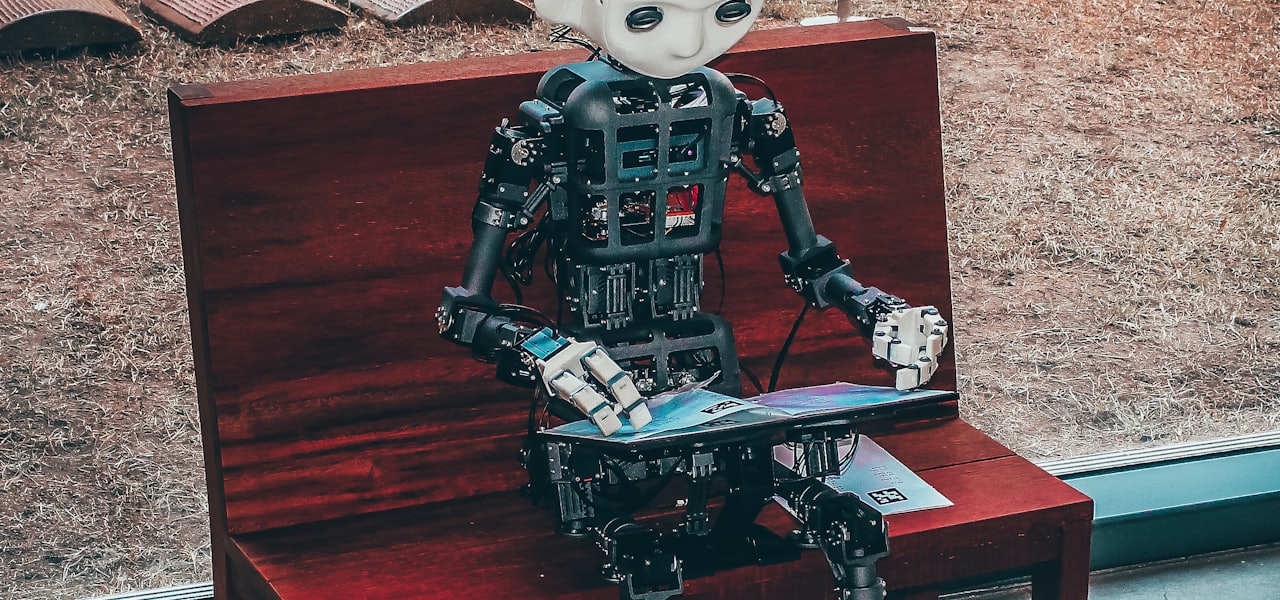
Artificial intelligence (AI) is the capability of computational systems to perform tasks typically associated with human intelligence, such as learning, reasoning, problem-solving, perception, and decision-making. It is a field of research in engineering, mathematics and computer science that develops and studies methods and software that enable machines to perceive their environment and use learning and intelligence to take actions that maximize their chances of achieving defined goals. High-profile applications of AI include advanced web search engines, chatbots, virtual assistants, autonomous vehicles, and play and analysis in strategy games (e.g., chess and Go). Since the 2020s, generative AI has become widely available to generate images, audio, and videos from text prompts. The traditional goals of AI research include learning, reasoning, knowledge representation, planning, natural language processing, and perception, as well as support for robotics. To reach these goals, AI researchers have used techniques including state space search and mathematical optimization, formal logic, artificial neural networks, and methods based on statistics, operations research, and economics. AI also draws upon psychology, linguistics, philosophy, neuroscience, and other fields. Some companies, such as OpenAI, Google DeepMind and Meta, aim to create artificial general intelligence (AGI) – AI that can complete virtually any cognitive task at least as well as a human. Artificial intelligence was founded as an academic discipline in 1956, and the field went through multiple cycles of optimism throughout its history, followed by periods of disappointment and loss of funding, known as AI winters. Funding and interest increased substantially after 2012, when graphics processing units began being used to accelerate neural networks, and deep learning outperformed previous AI techniques. This growth accelerated further after 2017 with the transformer architecture. In the 2020s, an AI boom has coincided with advances in generative AI, which allowed for the creation and modification of media. In addition to AI safety and unintended consequences and harms from the use of AI, ethical concerns, AI's long-term effects, and potential existential risks have prompted discussions of AI regulation. == Goals == The general problem of simulating (or creating) intelligence has been broken into subproblems. These consist of particular traits or capabilities that researchers expect an intelligent system to display. The traits described below have received the most attention and cover the scope of AI research. === Reasoning and problem-solving === Early researchers developed algorithms that imitated step-by-step reasoning that humans use when they solve puzzles or make logical deductions. By the late 1980s and 1990s, methods were developed for dealing with uncertain or incomplete information, employing concepts from probability and economics. Many of these algorithms are insufficient for solving large reasoning problems because they experience a "combinatorial explosion": They become exponentially slower as the problems grow. Even humans rarely use the step-by-step deduction that early AI research could model. They solve most of their problems using fast, intuitive judgments. Accurate and efficient reasoning is an unsolved problem. === Knowledge representation === Knowledge representation and knowledge engineering allow AI programs to answer questions intelligently and make deductions about real-world facts. Formal knowledge representations are used in content-based indexing and retrieval, scene interpretation, clinical decision support, knowledge discovery (mining "interesting" and actionable inferences from large databases), and other areas. A knowledge base is a body of knowledge represented in a form that can be used by a program. An ontology is the set of objects, relations, concepts, and properties used by a particular domain of knowledge. Knowledge bases need to represent things such as objects, properties, categories, and relations between objects; situations, events, states, and time; causes and effects; knowledge about knowledge (what we know about what other people know); default reasoning (things that humans assume are true until they are told differently and will remain true even when other facts are changing); and many other aspects and domains of knowledge. Among the most difficult problems in knowledge representation are the breadth of commonsense knowledge (the set of atomic facts that the average person knows is enormous); and the sub-symbolic form of most commonsense knowledge (much of what people know is not represented as "facts" or "statements" that they could express verbally). There is also the difficulty of knowledge acquisition, the problem of obtaining knowledge for AI applications. === Planning and decision-making === An "agent" is any entity (artificial or not) that perceives and takes actions in the world. A rational agent has goals or preferences and takes actions to make them happen. In automated planning, the agent has a specific goal. In automated decision-making, the agent has preferences—there are some situations it would prefer to be in, and some situations it is trying to avoid. The decision-making agent assigns a number to each situation (called the "utility") that measures how much the agent prefers it. For each possible action, it can calculate the "expected utility": the utility of all possible outcomes of the action, weighted by the probability that the outcome will occur. It can then choose the action with the maximum expected utility. In classical planning, the agent knows exactly what the effect of any action will be. In most real-world problems, however, the agent may not be certain about the situation they are in (it is "unknown" or "unobservable") and it may not know for certain what will happen after each possible action (it is not "deterministic"). It must choose an action by making a probabilistic guess and then reassess the situation to see if the action worked. Alongside thorough testing and improvement based on previous decisions, having an explanation for why the agent took certain decisions is a way to build trust, especially when the decisions have to be relied upon. In some problems, the agent's preferences may be uncertain, especially if there are other agents or humans involved. These can be learned (e.g., with inverse reinforcement learning), or the agent can seek information to improve its preferences. Information value theory can be used to weigh the value of exploratory or experimental actions. The space of possible future actions and situations is typically intractably large, so the agents must take actions and evaluate situations while being uncertain of what the outcome will be. A Markov decision process has a transition model that describes the probability that a particular action will change the state in a particular way and a reward function that supplies the utility of each state and the cost of each action. A policy associates a decision with each possible state. The policy could be calculated (e.g., by iteration), be heuristic, or it can be learned. Game theory describes the rational behavior of multiple interacting agents and is used in AI programs that make decisions that involve other agents. === Learning === Machine learning is the study of programs that can improve their performance on a given task automatically. It has been a part of AI from the beginning. There are several kinds of machine learning. Unsupervised learning analyzes a stream of data and finds patterns and makes predictions without any other guidance. Supervised learning requires labeling the training data with the expected answers, and comes in two main varieties: classification (where the program must learn to predict what category the input belongs in) and regression (where the program must deduce a numeric function based on numeric input). In reinforcement learning, the agent is rewarded for good responses and punished for bad ones. The agent learns to choose responses that are classified as "good". Transfer learning is when the knowledge gained from one problem is applied to a new problem. Deep learning is a type of machine learning that runs inputs through biologically inspired artificial neural networks for all of these types of learning. Computational learning theory can assess learners by computational complexity, by sample complexity (how much data is required), or by other notions of optimization. === Natural language processing === Natural language processing (NLP) allows programs to read, write and communicate in human languages. Specific problems include speech recognition, speech synthesis, machine translation, information extraction, information retrieval and question answering. Early work, based on Noam Chomsky's generative grammar and semantic networks, had difficulty with word-sense disambiguation unless
How Data Happened
How Data Happened: A History from the Age of Reason to the Age of Algorithms is a 2023 non-fiction book written by Columbia University professors Chris Wiggins and Matthew L. Jones. The book explores the history of data and statistics from the end of the 18th century to the present day. == Content == The book starts at the end of the 18th century, when European states began tabulating physical resources, and ends at the present day, when algorithms manipulate our personal information as a commodity. It looks at the rise of data and statistics, and how early statistical methods were used to justify eugenics, quantify supposed racial differences, and develop military and industrial applications. The authors also discuss the impact of the internet and e-commerce on data collection, the rise of data science, and the consequences of government-run surveillance systems collecting vast amounts of personal data for customized, targeted advertising. They emphasize the importance of privacy and democracy and propose remedies to the problems caused by mass data collection, including stronger regulation of the tech industry and collective action by its employees. The book is a historical analysis that provides context for understanding the debates surrounding data and its control. The book has 336 pages and was published in 2023 by W. W. Norton & Company.
Oscillatory neural network
An oscillatory neural network (ONN) is an artificial neural network that uses coupled oscillators as neurons. Oscillatory neural networks are closely linked to the Kuramoto model, and are inspired by the phenomenon of neural oscillations in the brain. Oscillatory neural networks have been trained to recognize images. Complex-Valued Oscillatory network has also been shown to store and retrieve multidimensional aperiodic signals. An oscillatory autoencoder has also been demonstrated, which uses a combination of oscillators and rate-coded neurons. A neuron made of two coupled oscillators, one having a fixed and the other having a tunable natural frequency, has been shown able to run logic gates such as XOR that conventional sigmoid neurons cannot.
Log-linear model
A log-linear model is a mathematical model that takes the form of a function whose logarithm equals a linear combination of the parameters of the model, which makes it possible to apply (possibly multivariate) linear regression. That is, it has the general form exp ( c + ∑ i w i f i ( X ) ) {\displaystyle \exp \left(c+\sum _{i}w_{i}f_{i}(X)\right)} , in which the fi(X) are quantities that are functions of the variable X, in general a vector of values, while c and the wi stand for the model parameters. The term may specifically be used for: A log-linear plot or graph, which is a type of semi-log plot. Poisson regression for contingency tables, a type of generalized linear model. The specific applications of log-linear models are where the output quantity lies in the range 0 to ∞, for values of the independent variables X, or more immediately, the transformed quantities fi(X) in the range −∞ to +∞. This may be contrasted to logistic models, similar to the logistic function, for which the output quantity lies in the range 0 to 1. Thus the contexts where these models are useful or realistic often depends on the range of the values being modelled.
T-distributed stochastic neighbor embedding
t-distributed stochastic neighbor embedding (t-SNE) is a statistical method for visualizing high-dimensional data by giving each datapoint a location in a two or three-dimensional map. It is based on Stochastic Neighbor Embedding originally developed by Geoffrey Hinton and Sam Roweis, where Laurens van der Maaten and Hinton proposed the t-distributed variant. It is a nonlinear dimensionality reduction technique for embedding high-dimensional data for visualization in a low-dimensional space of two or three dimensions. Specifically, it models each high-dimensional object by a two- or three-dimensional point in such a way that similar objects are modeled by nearby points and dissimilar objects are modeled by distant points with high probability. The t-SNE algorithm comprises two main stages. First, t-SNE constructs a probability distribution over pairs of high-dimensional objects in such a way that similar objects are assigned a higher probability while dissimilar points are assigned a lower probability. Second, t-SNE defines a similar probability distribution over the points in the low-dimensional map, and it minimizes the Kullback–Leibler divergence (KL divergence) between the two distributions with respect to the locations of the points in the map. While the original algorithm uses the Euclidean distance between objects as the base of its similarity metric, this can be changed as appropriate. A Riemannian variant is UMAP. t-SNE has been used for visualization in a wide range of applications, including genomics, computer security research, natural language processing, music analysis, cancer research, bioinformatics, geological domain interpretation, and biomedical signal processing. For a data set with n {\displaystyle n} elements, t-SNE runs in O ( n 2 ) {\displaystyle O(n^{2})} time and requires O ( n 2 ) {\displaystyle O(n^{2})} space. == Details == Given a set of N {\displaystyle N} high-dimensional objects x 1 , … , x N {\displaystyle \mathbf {x} _{1},\dots ,\mathbf {x} _{N}} , t-SNE first computes probabilities p i j {\displaystyle p_{ij}} that are proportional to the similarity of objects x i {\displaystyle \mathbf {x} _{i}} and x j {\displaystyle \mathbf {x} _{j}} , as follows. For i ≠ j {\displaystyle i\neq j} , define p j ∣ i = exp ( − ‖ x i − x j ‖ 2 / 2 σ i 2 ) ∑ k ≠ i exp ( − ‖ x i − x k ‖ 2 / 2 σ i 2 ) {\displaystyle p_{j\mid i}={\frac {\exp(-\lVert \mathbf {x} _{i}-\mathbf {x} _{j}\rVert ^{2}/2\sigma _{i}^{2})}{\sum _{k\neq i}\exp(-\lVert \mathbf {x} _{i}-\mathbf {x} _{k}\rVert ^{2}/2\sigma _{i}^{2})}}} and set p i ∣ i = 0 {\displaystyle p_{i\mid i}=0} . Note the above denominator ensures ∑ j p j ∣ i = 1 {\displaystyle \sum _{j}p_{j\mid i}=1} for all i {\displaystyle i} . As van der Maaten and Hinton explained: "The similarity of datapoint x j {\displaystyle x_{j}} to datapoint x i {\displaystyle x_{i}} is the conditional probability, p j | i {\displaystyle p_{j|i}} , that x i {\displaystyle x_{i}} would pick x j {\displaystyle x_{j}} as its neighbor if neighbors were picked in proportion to their probability density under a Gaussian centered at x i {\displaystyle x_{i}} ." Now define p i j = p j ∣ i + p i ∣ j 2 N {\displaystyle p_{ij}={\frac {p_{j\mid i}+p_{i\mid j}}{2N}}} This is motivated because p i {\displaystyle p_{i}} and p j {\displaystyle p_{j}} from the N samples are estimated as 1/N, so the conditional probability can be written as p i ∣ j = N p i j {\displaystyle p_{i\mid j}=Np_{ij}} and p j ∣ i = N p j i {\displaystyle p_{j\mid i}=Np_{ji}} . Since p i j = p j i {\displaystyle p_{ij}=p_{ji}} , you can obtain previous formula. Also note that p i i = 0 {\displaystyle p_{ii}=0} and ∑ i , j p i j = 1 {\displaystyle \sum _{i,j}p_{ij}=1} . The bandwidth of the Gaussian kernels σ i {\displaystyle \sigma _{i}} is set in such a way that the entropy of the conditional distribution equals a predefined entropy using the bisection method. As a result, the bandwidth is adapted to the density of the data: smaller values of σ i {\displaystyle \sigma _{i}} are used in denser parts of the data space. The entropy increases with the perplexity of this distribution P i {\displaystyle P_{i}} ; this relation is seen as P e r p ( P i ) = 2 H ( P i ) {\displaystyle Perp(P_{i})=2^{H(P_{i})}} where H ( P i ) {\displaystyle H(P_{i})} is the Shannon entropy H ( P i ) = − ∑ j p j | i log 2 p j | i . {\displaystyle H(P_{i})=-\sum _{j}p_{j|i}\log _{2}p_{j|i}.} The perplexity is a hand-chosen parameter of t-SNE, and as the authors state, "perplexity can be interpreted as a smooth measure of the effective number of neighbors. The performance of SNE is fairly robust to changes in the perplexity, and typical values are between 5 and 50.". Since the Gaussian kernel uses the Euclidean distance ‖ x i − x j ‖ {\displaystyle \lVert x_{i}-x_{j}\rVert } , it is affected by the curse of dimensionality, and in high dimensional data when distances lose the ability to discriminate, the p i j {\displaystyle p_{ij}} become too similar (asymptotically, they would converge to a constant). It has been proposed to adjust the distances with a power transform, based on the intrinsic dimension of each point, to alleviate this. t-SNE aims to learn a d {\displaystyle d} -dimensional map y 1 , … , y N {\displaystyle \mathbf {y} _{1},\dots ,\mathbf {y} _{N}} (with y i ∈ R d {\displaystyle \mathbf {y} _{i}\in \mathbb {R} ^{d}} and d {\displaystyle d} typically chosen as 2 or 3) that reflects the similarities p i j {\displaystyle p_{ij}} as well as possible. To this end, it measures similarities q i j {\displaystyle q_{ij}} between two points in the map y i {\displaystyle \mathbf {y} _{i}} and y j {\displaystyle \mathbf {y} _{j}} , using a very similar approach. Specifically, for i ≠ j {\displaystyle i\neq j} , define q i j {\displaystyle q_{ij}} as q i j = ( 1 + ‖ y i − y j ‖ 2 ) − 1 ∑ k ∑ l ≠ k ( 1 + ‖ y k − y l ‖ 2 ) − 1 {\displaystyle q_{ij}={\frac {(1+\lVert \mathbf {y} _{i}-\mathbf {y} _{j}\rVert ^{2})^{-1}}{\sum _{k}\sum _{l\neq k}(1+\lVert \mathbf {y} _{k}-\mathbf {y} _{l}\rVert ^{2})^{-1}}}} and set q i i = 0 {\displaystyle q_{ii}=0} . Herein a heavy-tailed Student t-distribution (with one-degree of freedom, which is the same as a Cauchy distribution) is used to measure similarities between low-dimensional points in order to allow dissimilar objects to be modeled far apart in the map. The locations of the points y i {\displaystyle \mathbf {y} _{i}} in the map are determined by minimizing the (non-symmetric) Kullback–Leibler divergence of the distribution P {\displaystyle P} from the distribution Q {\displaystyle Q} , that is: K L ( P ∥ Q ) = ∑ i ≠ j p i j log p i j q i j {\displaystyle \mathrm {KL} \left(P\parallel Q\right)=\sum _{i\neq j}p_{ij}\log {\frac {p_{ij}}{q_{ij}}}} The minimization of the Kullback–Leibler divergence with respect to the points y i {\displaystyle \mathbf {y} _{i}} is performed using gradient descent. The result of this optimization is a map that reflects the similarities between the high-dimensional inputs. == Output == While t-SNE plots often seem to display clusters, the visual clusters can be strongly influenced by the chosen parameterization (especially the perplexity) and so a good understanding of the parameters for t-SNE is needed. Such "clusters" can be shown to even appear in structured data with no clear clustering, and so may be false findings. Similarly, the size of clusters produced by t-SNE is not informative, and neither is the distance between clusters. Thus, interactive exploration may be needed to choose parameters and validate results. It has been shown that t-SNE can often recover well-separated clusters, and with special parameter choices, approximates a simple form of spectral clustering. == Software == A C++ implementation of Barnes-Hut is available on the github account of one of the original authors. The R package Rtsne implements t-SNE in R. ELKI contains tSNE, also with Barnes-Hut approximation scikit-learn, a popular machine learning library in Python implements t-SNE with both exact solutions and the Barnes-Hut approximation. Tensorboard, the visualization kit associated with TensorFlow, also implements t-SNE (online version) The Julia package TSne implements t-SNE
Artificial psychology
Artificial psychology (AP) has had multiple meanings dating back to 19th century, with recent usage related to artificial intelligence (AI).Artificial psychology is a theoretical field related to artificial intelligence, cognitive science, and psychology, which explores how advanced AI systems may develop human-like decision-making processes. In 1999, Zhiliang Wang and Lun Xie presented a theory of artificial psychology based on artificial intelligence. They analyze human psychology using information science research methods and artificial intelligence research to probe deeper into the human mind. == Main Theory == Dan Curtis (b. 1963) proposed AP is a theoretical discipline. The theory considers the situation when an artificial intelligence approaches the level of complexity where the intelligence meets two conditions: Condition I A: Makes all of its decisions autonomously B: Is capable of making decisions based on information that is New Abstract Incomplete C: The artificial intelligence is capable of reprogramming itself based on the new data, allowing it to evolve. D: And is capable of resolving its own programming conflicts, even in the presence of incomplete data. This means that the intelligence autonomously makes value-based decisions, referring to values that the intelligence has created for itself. Condition II All four criteria are met in situations that are not part of the original operating program When both conditions are met, then, according to this theory, the possibility exists that the intelligence will reach irrational conclusions based on real or created information. At this point, the criteria are met for intervention which will not necessarily be resolved by simple re-coding of processes due to extraordinarily complex nature of the codebase itself; but rather a discussion with the intelligence in a format which more closely resembles classical (human) psychology. If the intelligence cannot be reprogrammed by directly inputting new code, but requires the intelligence to reprogram itself through a process of analysis and decision based on information provided by a human, in order for it to overcome behavior which is inconsistent with the machines purpose or ability to function normally, then artificial psychology is by definition, what is required. The level of complexity that is required before these thresholds are met is currently a subject of extensive debate. The theory of artificial psychology does not address the specifics of what those levels may be, but only that the level is sufficiently complex that the intelligence cannot simply be recoded by a software developer, and therefore dysfunctionality must be addressed through the same processes that humans must go through to address their own dysfunctionalities. Along the same lines, artificial psychology does not address the question of whether or not the intelligence is conscious. As of 2022, the level of artificial intelligence does not approach any threshold where any of the theories or principles of artificial psychology can even be tested, and therefore, artificial psychology remains a largely theoretical discipline. Even at a theoretical level, artificial psychology remains an advanced stage of artificial intelligence.
Nearest neighbor search
Nearest neighbor search (NNS), as a form of proximity search, is the optimization problem of finding the point in a given set that is closest (or most similar) to a given point. Closeness is typically expressed in terms of a dissimilarity function: the less similar the objects, the larger the function values. Formally, the nearest neighbor (NN) search problem is defined as follows: given a set S of points in a space M and a query point q ∈ M {\displaystyle q\in M} , find the closest point in S to q. Donald Knuth in volume 3 of The Art of Computer Programming (1973) called it the post-office problem, referring to an application of assigning to a residence the nearest post office. A direct generalization of this problem is a k-NN search, where we need to find the k closest points. Most commonly M is a metric space and dissimilarity is expressed as a distance metric, which is symmetric and satisfies the triangle inequality. Even more common, M is taken to be the d-dimensional vector space where dissimilarity is measured using the Euclidean distance, Manhattan distance or other distance metric. However, the dissimilarity function can be arbitrary. One example is asymmetric Bregman divergence, for which the triangle inequality does not hold. == Applications == The nearest neighbor search problem arises in numerous fields of application, including: Pattern recognition – in particular for optical character recognition Statistical classification – see k-nearest neighbor algorithm Computer vision – for point cloud registration Computational geometry – see Closest pair of points problem Cryptanalysis – for lattice problem Databases – e.g. content-based image retrieval Coding theory – see maximum likelihood decoding Semantic search Vector databases, where nearest-neighbor lookup over embeddings is used to retrieve semantically similar records Retrieval-augmented generation systems, where nearest-neighbor retrieval over embeddings is used to fetch candidate passages or documents before generation Data compression – see MPEG-2 standard Robotic sensing Recommendation systems, e.g. see Collaborative filtering Internet marketing – see contextual advertising and behavioral targeting DNA sequencing Spell checking – suggesting correct spelling Plagiarism detection Similarity scores for predicting career paths of professional athletes. Cluster analysis – assignment of a set of observations into subsets (called clusters) so that observations in the same cluster are similar in some sense, usually based on Euclidean distance Chemical similarity Sampling-based motion planning == Methods == Various solutions to the NNS problem have been proposed. The quality and usefulness of the algorithms are determined by the time complexity of queries as well as the space complexity of any search data structures that must be maintained. The informal observation usually referred to as the curse of dimensionality states that there is no general-purpose exact solution for NNS in high-dimensional Euclidean space using polynomial preprocessing and polylogarithmic search time. === Exact methods === ==== Linear search ==== The simplest solution to the NNS problem is to compute the distance from the query point to every other point in the database, keeping track of the "best so far". This algorithm, sometimes referred to as the naive approach, has a running time of O(dN), where N is the cardinality of S and d is the dimensionality of S. There are no search data structures to maintain, so the linear search has no space complexity beyond the storage of the database. Naive search can, on average, outperform space partitioning approaches on higher dimensional spaces. The absolute distance is not required for distance comparison, only the relative distance. In geometric coordinate systems the distance calculation can be sped up considerably by omitting the square root calculation from the distance calculation between two coordinates. The distance comparison will still yield identical results. ==== Space partitioning ==== Since the 1970s, the branch and bound methodology has been applied to the problem. In the case of Euclidean space, this approach encompasses spatial index or spatial access methods. Several space-partitioning methods have been developed for solving the NNS problem. Perhaps the simplest is the k-d tree, which iteratively bisects the search space into two regions containing half of the points of the parent region. Queries are performed via traversal of the tree from the root to a leaf by evaluating the query point at each split. Depending on the distance specified in the query, neighboring branches that might contain hits may also need to be evaluated. For constant dimension query time, average complexity is O(log N) in the case of randomly distributed points, worst case complexity is O(kN^(1-1/k)) Alternatively the R-tree data structure was designed to support nearest neighbor search in dynamic context, as it has efficient algorithms for insertions and deletions such as the R tree. R-trees can yield nearest neighbors not only for Euclidean distance, but can also be used with other distances. In the case of general metric space, the branch-and-bound approach is known as the metric tree approach. Particular examples include vp-tree and BK-tree methods. Using a set of points taken from a 3-dimensional space and put into a BSP tree, and given a query point taken from the same space, a possible solution to the problem of finding the nearest point-cloud point to the query point is given in the following description of an algorithm. (Strictly speaking, no such point may exist, because it may not be unique. But in practice, usually we only care about finding any one of the subset of all point-cloud points that exist at the shortest distance to a given query point.) The idea is, for each branching of the tree, guess that the closest point in the cloud resides in the half-space containing the query point. This may not be the case, but it is a good heuristic. After having recursively gone through all the trouble of solving the problem for the guessed half-space, now compare the distance returned by this result with the shortest distance from the query point to the partitioning plane. This latter distance is that between the query point and the closest possible point that could exist in the half-space not searched. If this distance is greater than that returned in the earlier result, then clearly there is no need to search the other half-space. If there is such a need, then you must go through the trouble of solving the problem for the other half space, and then compare its result to the former result, and then return the proper result. The performance of this algorithm is nearer to logarithmic time than linear time when the query point is near the cloud, because as the distance between the query point and the closest point-cloud point nears zero, the algorithm needs only perform a look-up using the query point as a key to get the correct result. === Approximation methods === An approximate nearest neighbor search algorithm is allowed to return points whose distance from the query is at most c {\displaystyle c} times the distance from the query to its nearest points. The appeal of this approach is that, in many cases, an approximate nearest neighbor is almost as good as the exact one. In particular, if the distance measure accurately captures the notion of user quality, then small differences in the distance should not matter. ==== Greedy search in proximity neighborhood graphs ==== Proximity graph methods (such as navigable small world graphs and HNSW) are considered the current state-of-the-art for the approximate nearest neighbors search. The methods are based on greedy traversing in proximity neighborhood graphs G ( V , E ) {\displaystyle G(V,E)} in which every point x i ∈ S {\displaystyle x_{i}\in S} is uniquely associated with vertex v i ∈ V {\displaystyle v_{i}\in V} . The search for the nearest neighbors to a query q in the set S takes the form of searching for the vertex in the graph G ( V , E ) {\displaystyle G(V,E)} . The basic algorithm – greedy search – works as follows: search starts from an enter-point vertex v i ∈ V {\displaystyle v_{i}\in V} by computing the distances from the query q to each vertex of its neighborhood { v j : ( v i , v j ) ∈ E } {\displaystyle \{v_{j}:(v_{i},v_{j})\in E\}} , and then finds a vertex with the minimal distance value. If the distance value between the query and the selected vertex is smaller than the one between the query and the current element, then the algorithm moves to the selected vertex, and it becomes new enter-point. The algorithm stops when it reaches a local minimum: a vertex whose neighborhood does not contain a vertex that is closer to the query than the vertex itself. The idea of proximity neighborhood graphs was exploited in multiple publications, including the seminal paper by Arya and Mount, in the VoroNet syst